Early mourning thoughts and prayers…revisited.

This post was also shared on my personal blog: 2 Penny Blog.

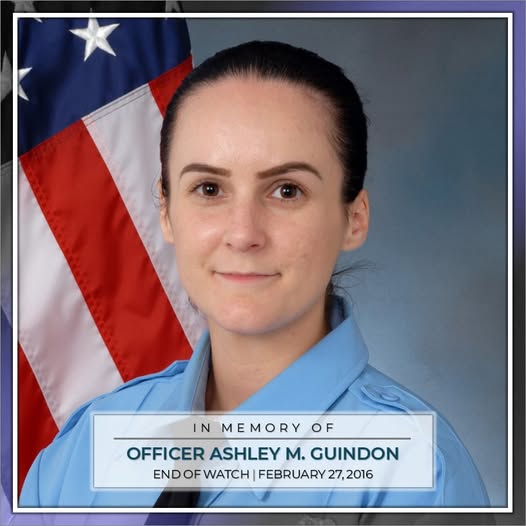
Ten years ago on the early morning of Sunday, February 28, 2016, I learned about the shooting of three Prince William County Police Officers as I prepared to head to my church (at the time in Mechanicsville, Virginia). One of the officers, Officer Guindon, had died from her wounds – just a day after becoming an officer.

Now, I had friends who worked with that department, and at times when an officer in Alexandria, I had served alongside Prince William police in training or some other task. Yet, I did not know her or those wounded. Still, the shootings angered me, and her death impacted me with surprising emotion and connection; bringing a sense of loss and memories of past, similar trauma.

There are reasons thousands of officers travel far, sometimes at their own expense, to honor fallen officers. Certainly, it displays solidarity and respect for the fallen. It’s meant to be a concrete sign of support to the family and department members in deep grief. A large crowd can help proclaim the message that the deceased’s life mattered and continues to matter. Much as the National Police Memorial indicates through its inscriptions, they will be honored, not for the way they died, but for how they lived.

As one police ministry in Texas notes on its webpage, “The job is referred to as having ‘a mystique veiled by a sacred canopy.’ The symbolism, pageantry and tradition make our calling noble.” And certainly, the “final radio call” and the playing of bagpipes serve to honor the officer’s dedication to service, but they also serve as a profound expression of grief fostering an emotional connection between those presents and speaking memories of other people and places gone but still carried in one’s heart. Vincent E. Henry correctly notes in his book, Death Work: Police, Trauma, and the Psychology of Survival (2004), that these events force officers to confront their own mortality. Funerals act as a necessary, though painful, part of the process for the survivors. There always exists the psychological reality that it could have been you or someone you know and love.

At the time of Officer Guindon’s death, I suspect that many people sensed the added “wrong” of her just starting her job with hope and celebration only to die the next day. As with infant or child deaths, such unexpected, sudden officer deaths can become personalized. Thus, they can become more intense if not traumatic. As suggested in literature about grief such as The Burden of Loss: Unexpected loss of a loved one and psychiatric disorder across the life course in a national study (2015), unexpected losses can make processing grief more difficult. The proximity of death emotionally or identity can cause very real complications for some. At the same time, I would remind the reader that we never fully “deal” with the grief of those we feel connected too. Anniversaries or other reminders can make us grieve anew. Indeed, it’s important to say that no one person grieves the same way.

So, I suppose that’s the fuller context of Prince William County’s Facebook post this morning. Departments promise to “never forget.” There are certainly members of the department still working who knew her personally and remember the trauma and loss of that day as if yesterday. Based on comments, you can see how people in and outside the department are touched by personal grief. Such deaths tend to stick with you.

The below essay was written in haste before heading out my door that morning. It wasn’t masterful. It won’t win a prize for literature. Yet it was my real time response echoing what I wrote about above. I’m reposting it in her honor but also for other colleagues of mine who have been murdered or died by suicide. May they all rest in peace, and may our love for one another, sacred memories shared, and God’s grace bring ongoing healing and hope until (as I believe) Jesus returns to wipe away all tears (Rev. 21:4).

God bless Officer Guindon’s mother, and all those who continue to grieve. Please join me in praying for our officers, deputies and their families each day.

My original post follows:

I’m thinking a lot this morning about my first shift, my first arrest, and the many men and women who helped me have a great (if relatively short) law enforcement career. They actually helped me become who I am today, and so I always give God thanks for them and my experiences. It is why I volunteer as a police chaplain today – to try to give back.

And yet, I’m also recalling the joy my family felt having just seen me graduate from the police academy, and then on that same weekend, seeing their fear as I headed out to my first midnight shift. I also remember with love coworkers injured and killed as a result of their desire to serve others. Thus, Officer Guindon’s death is somehow personal to me, as with every law enforcement death. I can’t help it. I feel like a piece of me has died, although I know it doesn’t make much sense to many.

How many Officer Guindon’s are out there? How many such families sacrifice, live in fear, or are now grieving across our country? How must her Field Training Officer and fellow officers feel as this recruit died and as they try to make sense of it? They all need our active support and prayer.

And yet, I don’t know how to pray for this. She was on her first shift, and the hope of last Friday has turned into community shock and grief spreading across the Thin Blue Line. I remain at a loss for words, especially as law enforcement officers in our country continue to be so quickly and openly hated, condemned and needlessly die. And so, I find comfort in these words. “But if we hope for what we do not see, we wait for it with patience. Likewise the Spirit helps us in our weakness; for we do not know how to pray as we ought, but that very Spirit intercedes with sighs too deep for words.” (Romans 8:25-26).

To my brothers and sisters still fighting the fight, you are not alone. God has not forgotten you. God will make good come from this evil, although we do not yet know how. No life dedicated to the service and love of neighbor is a wasted one, no matter how short. I remain in communion with you, and you will all be with me at worship this morning in my heavy but hopeful heart.

The Rev. Louis Florio is a former member of the City of Alexandria Police Department and current volunteer law enforcement chaplain with Hanover County Sheriff’s Office and the City of Fredericksburg’s Police Department. This post may be shared freely with proper attribution.

DISCLAIMER: THIS WEBSITE/PODCAST DOES NOT PROVIDE MEDICAL ADVICE

Although I have served or do serve as a spiritual counselor, a chaplain, and/or ordained minister, I am not your counselor nor a medical professional. All content on this website and podcast is provided for informational and educational purposes only, does not constitute medical, psychological, or spiritual advice, and does not establish any kind of patient-client or pastor-congregant relationship. Although on this website and podcast, we strive to provide accurate general information, the information found through these posts are not a substitute for any kind of professional advice, and you should not rely solely on this content. Always consult a professional in the area of your particular needs and circumstances prior to making any professional, legal, medical, financial or tax-related decisions. Opinions expressed by the host or guests do not necessarily reflect those of any other person or entity.

(C) 2026 The Rev. Louis Florio. All content not held under another’s copyright may not be used without permission of the author. Scripture passages when used are from the NRSVue translation unless otherwise indicated.

S2, E2 – Blessed are the peacemakers (Presentation)

The Footwashing Series #2: Justice, by Salt + Gold

On February 1, 2023, I had the opportunity to present at the Virginia Synod (ELCA’s) Midwinter Power in the Spirit. The theme of the online event was “Blessed are…” – a three evening examination of the Beatitudes. For my part, I was asked to speak to a group of Virginia Lutherans, the majority who had no law enforcement experience, about “Blessed are the Peacemakers.”

Using the extreme experience of law enforcement as a lens, I hoped to help people better understand the complexity, sacrifice and blessing of trying to be a peacemaker in our modern world. With this audience, the presentation was explicitly Christian, but it draws upon sociology and other fields of inquiry. You will likely hear something to challenge the understanding of your experience or affirm it in a helpful way. As always, you are invited to keep the conversation going. Please share this presentation or email me with any comments or questions. A video version of this presentation will be released by the Virginia Synod soon, and I will add the link here. You can learn more about the Virginia Synod at vasynod.org

To listen to my presentation through my podcast, visit: Midnights LEO on Anchor or your favorite podcast provider.

You can also watch an edited, video version provided by the Virginia Synod (ELCA):

DISCLAIMER: THIS WEBSITE/PODCAST DOES NOT PROVIDE MEDICAL ADVICE: Although I have served or do serve as a spiritual counselor, a chaplain, and/or ordained minister, I am not your counselor nor a medical professional. All content on this website and podcast is provided for informational and educational purposes only, does not constitute medical, psychological, or spiritual advice, and does not establish any kind of patient-client or pastor-congregant relationship. Although on this website and podcast we strive to provide accurate general information, the information found through these posts are not a substitute for any kind of professional advice, and you should not rely solely on this content. Always consult a professional in the area of your particular needs and circumstances prior to making any professional, legal, medical, financial or tax-related decisions. Opinions expressed by the host or guests do not necessarily reflect those of any other person or entity.

(c) 2023 by The Rev. Louis Florio

S1, E5 Sin-icism: How cynicism hurts the cynic and others (Essay)

The audio version of this podcast can be found on anchor and other podcast providers..

In a previous blogpost and podcast, Season 1, Episode 3, I first tried to unpack the unhealthy relationship between cynicism and police culture. As I noted, one will hear officers often claim cynicism keeps them safer, but an incredible amount of research and my personal experience does not support this. Indeed, when cynicism takes hold within us, we tend to separate from others and isolate. We can often descend further toward burnout or worse. This condition reflects our broken, difficult interactions within an imperfect world. Cynicism is an unhealthy response where we ultimately hurt ourselves or others – often unintentionally. I often in gest call this process sin-icism. (Sin is often defined as a violation against religious law, but it also can be an action considered highly reprehensible or reflective of a serious fault.[i] For our use here, it need not be religious in nature.)

Don’t believe that cynicism can hurt if not kill? Well, just Google the words “cynicism,” “health,” and “police” sometime. People with high levels of cynical distrust may be more likely to develop dementia.[ii] And some researchers even suggest that pessimism and cynicism can negatively impact heart health.[iii] From these many studies, you will also discover that there is a suggested linkage between poor health and cynicism. Cynicism might tend to promote ill health, and ill health might promote cynicism. These conditions tend to worsen one another.[iv] And if you know street cops, you know that they often suffer from chronic pain, obesity, stress conditions and more as they become veterans and prepare to retire. Their ill health can promote cynicism, and it is likely a symptom of or connected to something deeper going on inside them. Their woundedness from years on the beat, poor selfcare, and unhealthy, quick meals on the go starts to take its tole on the physical and emotional components of the self. It warps their outlook about others and the world in a way that does not reflect reality. And with cynicism growing, they often can find their isolation from others increasing. It is self-perpetuating, and yet because cynicism is catchy, cynical people tend to find one another to reenforce their negative and faulty views.

One early FBI Bulletin on the topic was titled, Police Cynicism – A Cancer in Law Enforcement. The author argued, “The inherent stress and frustration found in the law enforcement profession provides an ideal breeding ground for the disorder.”[v] Basically, as social beings, we are influenced by both our experiences and those around us. As a police recruit, you might enter the field of law enforcement ready to help others, but soon you encounter a disproportionate number of people who are inhumane to one another. You meet people who wish to deceive you if not hurt you. And the violence you interact with over time can leave its imprint on your soul. You might experience moral injuries,[vi] or you might experience a form of compassion fatigue.[vii] Then add to this mix seasoned officers who, as they associate with you, tell stories of their disappointments and travail. In doing so, as you begin to identify your own experiences with theirs, they subtly influence your worldview. Administrative issues, pay issues, and more can leave officers not only righlty disgruntled but also quite cynical. And unfortunately, cynicism can spread to infect the entire agency. Variables such as gender, race, and relations in policing might impact this process for good or ill.[viii]

There’s no denying it. The mountain of evidence regardless of one’s vocation indicates cynicism doesn’t help us. It hurts us. It tends to wound the officers, their families, and those whom they swore to serve and protect. Despite what some people might say, no one joins police work to hurt people. Healthy people feel called to this vocation because they want to try to help people. Yet somehow, the job can wear down our idealism into cynicism.

Officers often identify their cynicism as a kind of protection. They claim it helps them be ready for attack, betrayal, or disappointment. It serves as a kind of wall or boundary shielding them from hurt. Yet, what it really does is shield one from deeper and more meaningful relationships. In expecting bad things from people, one might misinterpret and overreact to comments. In anticipating resistance, an officer might become prone to use of force when another approach would work better. As officers struggle to turn off their concerns and worries – ruminating, personalizing, and catastrophizing them – Ellen Kirschman, PhD suggests, “they can develop a kind of tunnel vision, tending to isolate themselves from others and associate only with other cops; therefore, they have a limited reality check on the universe.”[ix] Rather than keep danger out, officers might develop a tendency to keep good out too. Spousal and other family relations can suffer if not die. The resulting isolation and emotional harm might facilitate addiction, extramarital affairs, or promote depression and suicidal thoughts over time. Cynicism kills relationships and sometimes ultimately the cynic.

As I’ve suggested in the previous post, a healthy skepticism is warranted. People can hurt you or break your trust. The world can be dangerous. So, observe and test relationships. Trust someone with something about yourself and see how they do with what you have shared. If they proved trustworthy, trust some more. Do so, over and over again, and if they trust you back with the things they share, intimacy can grow. On calls, practice safety techniques, but don’t obsess about danger. Developing this kind of tunnel vision on a call can result in bad outcomes for you or others. You might miss opportunities to deescalate the situation, or identify solutions to the problems at hand, or even miss a greater danger at hand because of your assumptions. Best of all, the less cynical you are, the more friends…the larger support network…might develop. You will recognize there is still good in the world, and you aren’t alone. You will have others to help walk with you through good times and bad.

In closing, I hope what I’ve shared will open up your mind or the mind of someone you love to the realities of life. Life can be hard, but it can always be good. Why make life and relationships harder for yourself? Why hurt others with your unhealthy attitude or hurt your overall health? In a future episode I will try to offer you some antidotes to the cancer of cynicism. I hope you will come back and join me then. Until next time, stay safe, try to do some good, and I hope to see you again soon.


[i] Merriam-Webster Online Dictionary https://www.merriam-webster.com/dictionary/sin

[ii] American Academy of Neurology (May 28, 2014). Press Release. Downloaded from https://www.aan.com/Pressroom/Home/Pressrelease/1286 on March 31, 2022.

[iii] Boyles, S. (August 10, 2009). Pessimism, Cynicism Can Hurt Your Heart. (Medically Reviewed by Elizabeth Klodas, MD, FACC on August 10, 2009), as downloaded from  https://www.webmd.com/heart-disease/news/20090810/pessimism-cynicism-can-hurt-your-heart on March 28, 2022.

[iv] Stravrova, O. and Ehlebracht, D. (December 7, 2018). European Journal of Personality, Eur. J. Pers. 33: 52–71 (2019)

Published online 7 December 2018 in Wiley Online Library (wileyonlinelibrary.com) DOI: 10.1002/per.2183

[v] Behrend, K.R. (August 1980). FBI Law Enforcement Bulletin, Volume: 49 Issue 8.  

[vi] “In traumatic or unusually stressful circumstances, people may perpetrate, fail to prevent, or witness events that contradict deeply held moral beliefs and expectations. When someone does something that goes against their beliefs this is often referred to as an act of commission and when they fail to do something in line with their beliefs that is often referred to as an act of omission. Individuals may also experience betrayal from leadership, others in positions of power or peers that can result in adverse outcomes. Moral injury is the distressing psychological, behavioral, social, and sometimes spiritual aftermath of exposure to such events. A moral injury can occur in response to acting or witnessing behaviors that go against an individual’s values and moral beliefs.” Norman, S. PhD and Maguen, S. PhD (ud). Moral Injury. Downloaded fromhttps://www.ptsd.va.gov/professional/treat/cooccurring/moral_injury.asp

[vii] “Compassion fatigue is a term that describes the physical, emotional, and psychological impact of helping others — often through experiences of stress or trauma. Compassion fatigue is often mistaken for burnout, which is a cumulative sense of fatigue or dissatisfaction.” See Compassion Fatigue: Symptoms to Look For at https://www.webmd.com/mental-health/signs-compassion-fatigue

[viii] Enciso, G., Maskaly, J., Donner, C.M. (20 March 2017). Organizational cynicism in policing: Examining the development and growth of cynicism among new police recruits [Abstract] in Policing: An International Journal.

[ix] Krischman, E., Ph.D. (2007). I Love a Cop: What Police Families Need to Know (Rev. Ed.). New York: The Guilford Press. p. 32-34.

© 2022 The Rev. Louis Florio. All content not held under another’s copyright may not be used without permission of the author. Views are my own or those of my guests. Content does not necessarily reflect the views of any other organization or person(s).

DISCLAIMER: THIS WEBSITE/PODCAST DOES NOT PROVIDE MEDICAL ADVICE

Although I have served or do serve as a spiritual counselor, a chaplain, and/or ordained minister, I am not your counselor nor a medical professional. All content on this website and podcast is provided for informational and educational purposes only, does not constitute medical, psychological, or spiritual advice, and does not establish any kind of patient-client or pastor-congregant relationship. Although on this website and podcast, we strive to provide accurate general information, the information found through these posts are not a substitute for any kind of professional advice, and you should not rely solely on this content. Always consult a professional in the area of your particular needs and circumstances prior to making any professional, legal, medical, financial or tax-related decisions. Opinions expressed by the host or guests do not necessarily reflect those of any other person or entity.