S2, E4 Seeking, Creating, and Keeping Peace (Meditation)

You can listen to the below blog post on Spotify or other providers.


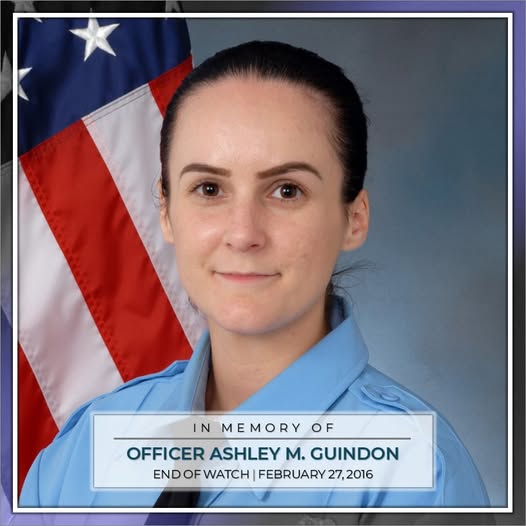
“My head hurts from being pummeled repeatedly with rocks. My arms and torso ache from taking direct hits from water bottles flung at us. My shin hurts from a tear gas canister that someone threw back at us. My back hurts from having to wear riot gear for 7 hours on top of my normal 30 extra pounds of gear. I vomited for 10 minutes into a toilet when I got home this morning. My sense of dignity is hurt by the unspeakable things that were said to my brothers and sisters in blue who happen to be black. My sense of family is hurt by the unspeakable things that were said to us about our own children, parents, and siblings. And my heart breaks for the city that I love. I know my city is hurting right now. I know people are angry and want answers. But there’s only one way we can move forward together, right now: love. Lots and lots of love. Connect. Respect. Protect. And Love. Time to go keep the peace.” – Ofc. Brad Philip, Public Facebook Post, 9/21/16 

Image from https://tportell.wordpress.com/2020/11/23/hesed-the-love-of-god/

As time passes, physical wounds might heal, but emotional wounds and bad memories can remain. I came across the above post recently in a Facebook memory, and indeed, it brought back a lot of memories. This was one of several difficult times for law enforcement over the past decade or so. Those whom we wish to serve can reject us harshly and unfairly at times. So, I very much admire this officer’s wisdom and insight in the face of adversity. We cannot undo bad things with more bad actions. As part of the law enforcement culture, we might not use the word often enough, but love is the only way forward. 

In the Jewish tradition, there is a concept called hesed. The Hebrew word hesed simply means loving-kindness. The use of this word incorporates kindness, mercy, and steadfast love as mentioned in the Hebrew scriptures. When humans share hesed, they are reflecting the Divine Being’s nature (or the more secular might argue, an ultimate value). We are offering love for love’s sake. It is not about someone deserving it. It is not romantic love, but it is a kind of deep, connecting love, nonetheless. It recognizes the intrinsic sanctity of all life. It is love offered in action for others as a redeemer and protector.[i]

In any relationship, we can never make someone love us or treat us well. All that we can do is take ownership of our own actions. As our siblings in Twelve Step programs discover, we only have power to clean up our side of the street.[ii] In seeking to love others, even our enemies, we can help accomplish what other scriptures from varied religions and spiritual philosophies argue using varied words. We can help ultimately defeat evil with good. People of goodwill tend to see such love in others and respond, but traditional enemies and bad actors sometimes do as well. It can disarm angry people who want to have an excuse (perhaps any excuse) to get angrier. Such love can transform people. It might transform yourself. This likely seems counter intuitive, but it works. I experienced this in my own time as a police officer, and I thank my FTO for demonstrating this kind of behavior for me to learn from and be inspired by.

“Connect. Respect. Protect. And Love.”[iii] I would argue that’s part of the attitude of hesed too. Hesed is slow and hard work. Yet when we live up to our call as law enforcement, this is the ultimate value we represent. Through seeking to represent such a love – as best as you understand it – in what can prove an unloving world, I think you will find that you won’t just be keeping the peace. Your faithful service will be helping create peace in the world and within yourself.

That’s it for this time. Stay safe, seek to do some good, and I hope to see you again soon.


[i] See HarperCollins Bible Dictionary. (1996). Achtemeir, P.J., General Editor. “Loving-kindness,” Gammie, J.G. San Francisco: Harper Collins. p. 627-628.

[ii] Alcoholics Anonymous. (1990). New York: Alcoholics Anonymous World Services, Inc., p. 77-78.

[iii] Ofc. Brad Philip, public Facebook post, 2016.

DISCLAIMER: THIS WEBSITE/PODCAST DOES NOT PROVIDE MEDICAL ADVICE

Although I have served or do serve as a spiritual counselor, a chaplain, and/or ordained minister, I am not your counselor nor a medical professional. All content on this website and podcast is provided for informational and educational purposes only, does not constitute medical, psychological, or spiritual advice, and does not establish any kind of patient-client or pastor-congregant relationship. Although on this website and podcast, we strive to provide accurate general information, the information found through these posts are not a substitute for any kind of professional advice, and you should not rely solely on this content. Always consult a professional in the area of your particular needs and circumstances prior to making any professional, legal, medical, financial or tax-related decisions. Opinions expressed by the host or guests do not necessarily reflect those of any other person or entity.

(c) 2023 by The Rev. Louis Florio


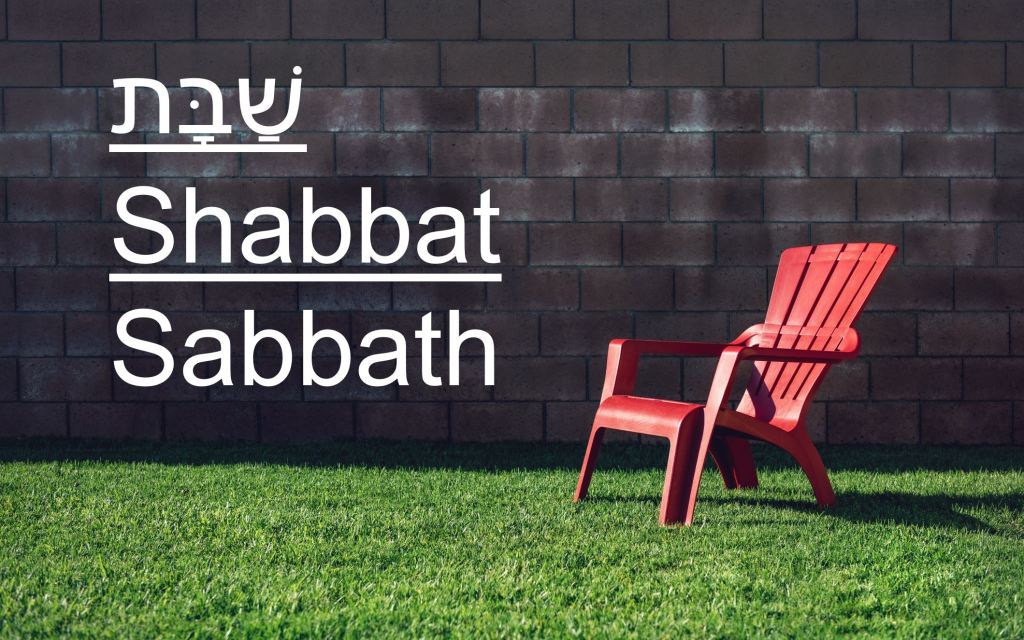
S2, E3 – Rest & Resiliency: The importance of taking sabbath for everyone (Sermon)

Original photo by Tim Mossholder on unsplash.com. Used by permission.

I don’t usually post my sermons on this podcast, but I think this particular sermon will resonate with many working in any field related to first responders. I look at the commands for sabbath rest found in scripture in light of my own experience as a police officer in the late 1980s through mid-90s. This subject of sabbath rest is a common value that often crisscrosses the spectrum of religious faiths and secular philosophies. Rest is critical! Whether you think the story of God’s commandments is divine inspiration or just an ancient wisdom tale, I think you will find something to help orient you in your work and restore your spirit. If you would like to hear more on the subject of rest, listen to the special crossover episode (S1, E7) “Self-Care and Sabbath Rest.”

Texts for the sermon: Deuteronomy 5:12-15 and Matthew 11:28-30

Listen now on Spotify.

Or read it below:

If and when someone mentions the word “sabbath,” what comes to mind?  Often, people think about coming to church for services, or restful activities (like golf or fishing, taking a nap), or family activities and dinners. That can all be part of sabbath practices, but there’s a lot more implied by that little biblical word. Over the next three weeks, the Narrative Lectionary asks us to take a break and reflect upon what sabbath is, why God commanded it, and how are we can rightly observe it.  

Now, you might recall that the Ten Commandments or Ten Sayings of God in Hebrew are mentioned explicitly in the Jewish scriptures (our Old Testament) only three times (once in Exodus and twice in Deuteronomy). Yet, they remain key to all that comes afterward…key to who the newly freed Israelites are to become…even foundational to what Jesus will teach. Recall that these Twelve Tribes of Israel have survived the horrors and burdens of slavery, and they have come out wounded. They don’t have a good idea of who they are as a people or of their purpose. They are prone to selfishness and infighting. They might be easily influenced by the world around them. So, God provides Moses and his people a structure for their lives. Through these sayings, God commands that they love God, but also commands the love of family, and love of community. These commands are meant to help us love as God loves.

You might also know that some suggest that there are 613 other commandments (or mitzvot) found in the Jewish scriptures (people can count differently), but “the Ten” are the only ones that come directly from God. And all those other dietary laws, and laws about appearance, worship, and civil law relate to the ten – come out of them…are meant to magnify them, The Laws of Moses are all meant (as strange as they might sound to our modern ears) to help Israelites love and worship God and love the neighbor as oneself. As my professor Dr. Dean McBride argued, the Ten Commandments serve as a polity for the Israelites (a kind of constitution), so that they can become kodesh olam, a holy people set apart, the Holy People of God.  

So isn’t it interesting that among these ten sayings, we find the command to take a sabbath…to stop doing and just be. Yet “sabbath” isn’t just about you. You are to give a sabbath to your family, your workers, any slaves, even your animals. Isn’t that curious? To become who they are called to be, meant to be, the Israelites are told to promote rest. Much as God ceased work on the seventh day of creation, they are to cease all their work. Yet as a people that has been formally forced to work sometimes seven days a week in Egypt as slaves, God indicates that this practice isn’t just about remembering the creation of the world. God says, “Remember that you were a slave in the land of Egypt, and the Lord your God brought you out from there with a mighty hand and an outstretched arm.” The sabbath is a day to cease work but also a day to embody and remember our faith that God has saved us and loves us. God will provide. So, we can relax.

And so over time, the idea of going to the Temple, or synagogue, or eventually Christian church became intimately connected to the concept of “sabbath.” In community, we can hear of God’s glory, share in community life, and offer worship and praise. Yet it seems that it wasn’t always this way. Some scholars think that the destruction of Temple of Jerusalem and Babylonian Exile gave rise to synagogues sometime after 597 BC. Before that, the Temple, and before that the Tent of Meeting would have priestly activities conducted on the Sabbath, but there was no expectation of the average person’s presence. Primarily, most people just ceased all work. As time passed in the face of persecution, wars, and exile…as the People of God continued to separate themselves from the pagan practices of those around them, they discovered how helpful corporate worship could be in facilitating the people’s understanding of their identities and call. By Jesus’ time, there were pious people who would gather on the Sabbath to sing hymns, listen to scripture, and hear Rabbi’s (or “teachers”) apply the scriptures to one’s daily life. This is much as we do today, and much as faithful Jews do today.

Rest and remember, those are two keys to becoming more of who we were created and meant to be. Certainly, our insurance companies have finally taken notice at some level. All these centuries later, in the Federal government and businesses, one will hear about wellness wheels where we are encouraged to see to the needs of not only our physical body, but also our mental, emotional, and even spiritual selves. As humans, we might understand spirituality differently (that openness to the idea that we are part of something greater than ourselves), but somehow these parts of who we are all interact. They are all connected in our make-up. Yes, the ancient practices of Sabbath helped the Israelites perform better, be better, and grow individually and in community, as much as the practice can help us do so today.  

For example, when I was a young police officer working countless hours on midnight shift, volunteering to serve at other times for extra pay, chasing after promotion, without recognizing it, I was running myself ragged. Add to that a toxic mix of trauma and constant stress (basically life – we all experience stress), and I ended up in crisis. My relationships were suffering as were aspects of my health. Then with the help of friends who saw my suffering as well as God’s help (I would argue), I sought to reorient my life toward a more scriptural understanding. I continued to seek to care for others but now also myself. I came to a new understanding that caring for myself was not selfish if done in order to love God and neighbor better. Indeed, I was reminded that God’s commands can be summarized by this, “Loving God with our whole body, heart, and soul (all that we are), and loving our neighbor as ourselves”…That is “AS ourselves,” not better than ourselves.

Because God loves us, within his commands, we discover a healthy love of self can promote love of God and others…It can enrich our lives! And in my case, as a Sergeant pointed out to me without knowing any of my efforts during an annual review that first year, he began to see me perform better and become more patient and kinder. I also found that I handled stress better. Even at some life and death moments, I found that I thought more clearly and discerned more options for how I could respond to the world. I discovered that I became more resilient.

Rest and remember. That’s good advice, for as humans we can easily fall into survival mode. We can find ourselves far from the abundant life Jesus promised. We can burn out rather than burn brightly with the love of Christ. Some might stop superficially at the command to rest and remember never going deeper. Many might become legalistic about it. Others might even become rigid and busy in how they play and vacation – doing, doing, doing. Yet Jesus taught there is more going on here. He told the rabbis of his time that the Sabbath Day was created for us as a blessing. It is not about you being a bad person because your butt is not in a pew every time the door is open. It isn’t just about sleep or vacation. Sure, these things need to be prioritized at times…taken seriously…but we are not given the gift of life for the sake of sabbath. The sabbath is a gift given us so that we can discover a more abundant life.

As an article I read recently suggests, some might judge you harshly for not being at Church.[i] It is true that you might be hurting yourself and in your absence be hurting others who need your presence. They might need your witness of faith, or even just a kind word in passing from you. Yet there are times that our call to be family or serve in the world might also take precedence. And so, the Church has historically discerned that if you cannot be present or have to work or volunteer on any Sunday, be sure to take another Sabbath Day.

Indeed, as early Christians were thrown out of the synagogues and persecuted, our Sabbath Day moved from the Jewish practice of Saturday to Sunday, the day we remember Christ’s resurrection for our sake. So, sabbath is not exclusively about one special day in the week whether Saturday or Sunday. It is not solely about worship.

Again, there’s more going on here. Bonnie Gray, who writes a lot on sabbath rest, argues, “Jesus’ response to our lack of rest is shockingly opposite of these condemning voices.” Jesus taught, “Come to me, all you who are weary and are carrying heavy burdens, and I will give you rest. Take my yoke upon you” …and you will find the rest your souls hunger for. Not surprisingly, God’s heart for us and our need for rest goes deeper than we ourselves can obtain on our own. Even for sabbath, we need God’s help – God’s grace. True sabbath, Bonnie Gray argues, is returning to who God created us to be. Accepted and beloved just as we are.”[ii]

Yes, she goes on, rest contains emotional honesty. We are not gods. We need forgiveness. We need food for our journey. We need to hear of God’s love for us. Rest means that we won’t allow a world that shouts at us, “Do more! Be perfect! Work harder!” to define us. Only God’s love ultimately defines us, and God says it is not only ok, but it can be good to rest. It is important to stop and remember that we are loved, need to share love, and need to be loved. And so there is a relational component to rest. Just as Jesus ate and laughed with his disciples, just as he encouraged their vulnerability to one another and to God, we come to understand that rest is an experience of being known. It is good to have people who you can just be your imperfect self with. In seeking holy, purposeful rest, she says that we resist the noise around us, and we grow still to know God better and listen to God’s whispers.

As much as God fed and cared for Elijah when he was at his physical, mental, emotional, and spiritual limit, God seeks to bless us through rest. Our intimacy with and healthy dependance upon God will grow from the process of rest. And like all of creation that rests in the love of God, as the prophet Isaiah pointed out, we too will break forth into shouts of joy (Isa. 14:7). In closing, Bonnie Gray suggests that rest is giving yourself grace “to receive all the good, instead of letting in the guilt.” “Move as God prompts you,” she urges, “inspired by [God’s] goodness, rather than fear or guilt.” And I would add, rather than from any selfish motivations.

Surrounded by crowds needing forgiveness and healing, with the weight of the world’s salvation on his shoulders, it is important for us to notice that Jesus would break away to pray in the mountains or spend time with those whom he loved. Jesus would go to the Synagogue for the gift of communal worship. Jesus would sleep or allow angels or others to minister to him. Jesus in human form – as busy as he was, as important as his mission was – knew he needed sabbath rest. So, why are we so prideful to deny our own need? Yes, Holy Wisdom proclaims, “There is a time for everything, and a season for every activity under the heavens” (Ecc. 3:1). This includes sabbath…It includes holy rest. Jesus proclaimed that he came that those he loves may have life and have it abundantly. Taking on his yoke, receiving the gift of abundant life, includes taking on his many practices of sabbath rest – not as obligation, but as a means of grace. God commanded sabbath because God knows our needs as created creatures and loves us. Amen.


[i] “What the Bible Says About Rest,” by Bonnie Gray in Relevant Magazine (August 3, 2023) as downloaded at https://relevantmagazine.com/faith/what-the-bible-says-about-rest.

[ii] Ibid.

DISCLAIMER: THIS WEBSITE/PODCAST DOES NOT PROVIDE MEDICAL ADVICE: Although I have served or do serve as a spiritual counselor, a chaplain, and/or ordained minister, I am not your counselor nor a medical professional. All content on this website and podcast is provided for informational and educational purposes only, does not constitute medical, psychological, or spiritual advice, and does not establish any kind of patient-client or pastor-congregant relationship. Although on this website and podcast we strive to provide accurate general information, the information found through these posts are not a substitute for any kind of professional advice, and you should not rely solely on this content. Always consult a professional in the area of your particular needs and circumstances prior to making any professional, legal, medical, financial or tax-related decisions. Opinions expressed by the host or guests do not necessarily reflect those of any other person or entity.

(c) 2023 by The Rev. Louis Florio

S2, E2 – Blessed are the peacemakers (Presentation)

The Footwashing Series #2: Justice, by Salt + Gold

On February 1, 2023, I had the opportunity to present at the Virginia Synod (ELCA’s) Midwinter Power in the Spirit. The theme of the online event was “Blessed are…” – a three evening examination of the Beatitudes. For my part, I was asked to speak to a group of Virginia Lutherans, the majority who had no law enforcement experience, about “Blessed are the Peacemakers.”

Using the extreme experience of law enforcement as a lens, I hoped to help people better understand the complexity, sacrifice and blessing of trying to be a peacemaker in our modern world. With this audience, the presentation was explicitly Christian, but it draws upon sociology and other fields of inquiry. You will likely hear something to challenge the understanding of your experience or affirm it in a helpful way. As always, you are invited to keep the conversation going. Please share this presentation or email me with any comments or questions. A video version of this presentation will be released by the Virginia Synod soon, and I will add the link here. You can learn more about the Virginia Synod at vasynod.org

To listen to my presentation through my podcast, visit: Midnights LEO on Anchor or your favorite podcast provider.

You can also watch an edited, video version provided by the Virginia Synod (ELCA):

DISCLAIMER: THIS WEBSITE/PODCAST DOES NOT PROVIDE MEDICAL ADVICE: Although I have served or do serve as a spiritual counselor, a chaplain, and/or ordained minister, I am not your counselor nor a medical professional. All content on this website and podcast is provided for informational and educational purposes only, does not constitute medical, psychological, or spiritual advice, and does not establish any kind of patient-client or pastor-congregant relationship. Although on this website and podcast we strive to provide accurate general information, the information found through these posts are not a substitute for any kind of professional advice, and you should not rely solely on this content. Always consult a professional in the area of your particular needs and circumstances prior to making any professional, legal, medical, financial or tax-related decisions. Opinions expressed by the host or guests do not necessarily reflect those of any other person or entity.

(c) 2023 by The Rev. Louis Florio

S2, E1 – Self-Care and Sabbath Rest (Discussion)

SPECIAL CROSSOVER EPISODE! Listen to S2, E1 here.

My valued friend and colleague, Fr. Ethan Lowery, hosts an on-going conversation with friends about rest, sabbath, and resisting the overbearing cultural pressure to work/produce/be available all the time. He shares these conversations through a podcast primarily aimed at young adults called Non-Working Title.

Although originally intended for the young adults whom he serves, this episode’s discussion will likely be very relatable and helpful to first responders. Topics covered in this crossover episode include: trauma, secondary trauma, family systems, addiction, sleep issues, and more. This episode will echo some topics and illustrations mentioned in “Self-Care when helping others” (S1, E7), but it is much more conversational, personal, and expansive. I offer my thanks to Fr. Ethan for his allowing me to share this edited version of my interview here.

For those that don’t know him, Fr. Ethan Lowery (he/him) is an Episcopal Priest and young adult and campus missioner here locally in Fredericksburg, VA. He shares often that his interest in young adult ministry is rooted in being a young adult and having experienced himself the Church not always knowing what to do with 20- and 30-somethings. You can learn more at The House FXBG.

DISCLAIMER: THIS WEBSITE/PODCAST DOES NOT PROVIDE MEDICAL ADVICE: Although I have served or do serve as a spiritual counselor, a chaplain, and/or ordained minister, I am not your counselor nor a medical professional. All content on this website and podcast is provided for informational and educational purposes only, does not constitute medical, psychological, or spiritual advice, and does not establish any kind of patient-client or pastor-congregant relationship. Although on this website and podcast we strive to provide accurate general information, the information found through these posts are not a substitute for any kind of professional advice, and you should not rely solely on this content. Always consult a professional in the area of your particular needs and circumstances prior to making any professional, legal, medical, financial or tax-related decisions. Opinions expressed by the host or guests do not necessarily reflect those of any other person or entity.

(c) 2023 by The Rev. Louis Florio

S1, E5 Sin-icism: How cynicism hurts the cynic and others (Essay)

The audio version of this podcast can be found on anchor and other podcast providers..

In a previous blogpost and podcast, Season 1, Episode 3, I first tried to unpack the unhealthy relationship between cynicism and police culture. As I noted, one will hear officers often claim cynicism keeps them safer, but an incredible amount of research and my personal experience does not support this. Indeed, when cynicism takes hold within us, we tend to separate from others and isolate. We can often descend further toward burnout or worse. This condition reflects our broken, difficult interactions within an imperfect world. Cynicism is an unhealthy response where we ultimately hurt ourselves or others – often unintentionally. I often in gest call this process sin-icism. (Sin is often defined as a violation against religious law, but it also can be an action considered highly reprehensible or reflective of a serious fault.[i] For our use here, it need not be religious in nature.)

Don’t believe that cynicism can hurt if not kill? Well, just Google the words “cynicism,” “health,” and “police” sometime. People with high levels of cynical distrust may be more likely to develop dementia.[ii] And some researchers even suggest that pessimism and cynicism can negatively impact heart health.[iii] From these many studies, you will also discover that there is a suggested linkage between poor health and cynicism. Cynicism might tend to promote ill health, and ill health might promote cynicism. These conditions tend to worsen one another.[iv] And if you know street cops, you know that they often suffer from chronic pain, obesity, stress conditions and more as they become veterans and prepare to retire. Their ill health can promote cynicism, and it is likely a symptom of or connected to something deeper going on inside them. Their woundedness from years on the beat, poor selfcare, and unhealthy, quick meals on the go starts to take its tole on the physical and emotional components of the self. It warps their outlook about others and the world in a way that does not reflect reality. And with cynicism growing, they often can find their isolation from others increasing. It is self-perpetuating, and yet because cynicism is catchy, cynical people tend to find one another to reenforce their negative and faulty views.

One early FBI Bulletin on the topic was titled, Police Cynicism – A Cancer in Law Enforcement. The author argued, “The inherent stress and frustration found in the law enforcement profession provides an ideal breeding ground for the disorder.”[v] Basically, as social beings, we are influenced by both our experiences and those around us. As a police recruit, you might enter the field of law enforcement ready to help others, but soon you encounter a disproportionate number of people who are inhumane to one another. You meet people who wish to deceive you if not hurt you. And the violence you interact with over time can leave its imprint on your soul. You might experience moral injuries,[vi] or you might experience a form of compassion fatigue.[vii] Then add to this mix seasoned officers who, as they associate with you, tell stories of their disappointments and travail. In doing so, as you begin to identify your own experiences with theirs, they subtly influence your worldview. Administrative issues, pay issues, and more can leave officers not only righlty disgruntled but also quite cynical. And unfortunately, cynicism can spread to infect the entire agency. Variables such as gender, race, and relations in policing might impact this process for good or ill.[viii]

There’s no denying it. The mountain of evidence regardless of one’s vocation indicates cynicism doesn’t help us. It hurts us. It tends to wound the officers, their families, and those whom they swore to serve and protect. Despite what some people might say, no one joins police work to hurt people. Healthy people feel called to this vocation because they want to try to help people. Yet somehow, the job can wear down our idealism into cynicism.

Officers often identify their cynicism as a kind of protection. They claim it helps them be ready for attack, betrayal, or disappointment. It serves as a kind of wall or boundary shielding them from hurt. Yet, what it really does is shield one from deeper and more meaningful relationships. In expecting bad things from people, one might misinterpret and overreact to comments. In anticipating resistance, an officer might become prone to use of force when another approach would work better. As officers struggle to turn off their concerns and worries – ruminating, personalizing, and catastrophizing them – Ellen Kirschman, PhD suggests, “they can develop a kind of tunnel vision, tending to isolate themselves from others and associate only with other cops; therefore, they have a limited reality check on the universe.”[ix] Rather than keep danger out, officers might develop a tendency to keep good out too. Spousal and other family relations can suffer if not die. The resulting isolation and emotional harm might facilitate addiction, extramarital affairs, or promote depression and suicidal thoughts over time. Cynicism kills relationships and sometimes ultimately the cynic.

As I’ve suggested in the previous post, a healthy skepticism is warranted. People can hurt you or break your trust. The world can be dangerous. So, observe and test relationships. Trust someone with something about yourself and see how they do with what you have shared. If they proved trustworthy, trust some more. Do so, over and over again, and if they trust you back with the things they share, intimacy can grow. On calls, practice safety techniques, but don’t obsess about danger. Developing this kind of tunnel vision on a call can result in bad outcomes for you or others. You might miss opportunities to deescalate the situation, or identify solutions to the problems at hand, or even miss a greater danger at hand because of your assumptions. Best of all, the less cynical you are, the more friends…the larger support network…might develop. You will recognize there is still good in the world, and you aren’t alone. You will have others to help walk with you through good times and bad.

In closing, I hope what I’ve shared will open up your mind or the mind of someone you love to the realities of life. Life can be hard, but it can always be good. Why make life and relationships harder for yourself? Why hurt others with your unhealthy attitude or hurt your overall health? In a future episode I will try to offer you some antidotes to the cancer of cynicism. I hope you will come back and join me then. Until next time, stay safe, try to do some good, and I hope to see you again soon.


[i] Merriam-Webster Online Dictionary https://www.merriam-webster.com/dictionary/sin

[ii] American Academy of Neurology (May 28, 2014). Press Release. Downloaded from https://www.aan.com/Pressroom/Home/Pressrelease/1286 on March 31, 2022.

[iii] Boyles, S. (August 10, 2009). Pessimism, Cynicism Can Hurt Your Heart. (Medically Reviewed by Elizabeth Klodas, MD, FACC on August 10, 2009), as downloaded from  https://www.webmd.com/heart-disease/news/20090810/pessimism-cynicism-can-hurt-your-heart on March 28, 2022.

[iv] Stravrova, O. and Ehlebracht, D. (December 7, 2018). European Journal of Personality, Eur. J. Pers. 33: 52–71 (2019)

Published online 7 December 2018 in Wiley Online Library (wileyonlinelibrary.com) DOI: 10.1002/per.2183

[v] Behrend, K.R. (August 1980). FBI Law Enforcement Bulletin, Volume: 49 Issue 8.  

[vi] “In traumatic or unusually stressful circumstances, people may perpetrate, fail to prevent, or witness events that contradict deeply held moral beliefs and expectations. When someone does something that goes against their beliefs this is often referred to as an act of commission and when they fail to do something in line with their beliefs that is often referred to as an act of omission. Individuals may also experience betrayal from leadership, others in positions of power or peers that can result in adverse outcomes. Moral injury is the distressing psychological, behavioral, social, and sometimes spiritual aftermath of exposure to such events. A moral injury can occur in response to acting or witnessing behaviors that go against an individual’s values and moral beliefs.” Norman, S. PhD and Maguen, S. PhD (ud). Moral Injury. Downloaded fromhttps://www.ptsd.va.gov/professional/treat/cooccurring/moral_injury.asp

[vii] “Compassion fatigue is a term that describes the physical, emotional, and psychological impact of helping others — often through experiences of stress or trauma. Compassion fatigue is often mistaken for burnout, which is a cumulative sense of fatigue or dissatisfaction.” See Compassion Fatigue: Symptoms to Look For at https://www.webmd.com/mental-health/signs-compassion-fatigue

[viii] Enciso, G., Maskaly, J., Donner, C.M. (20 March 2017). Organizational cynicism in policing: Examining the development and growth of cynicism among new police recruits [Abstract] in Policing: An International Journal.

[ix] Krischman, E., Ph.D. (2007). I Love a Cop: What Police Families Need to Know (Rev. Ed.). New York: The Guilford Press. p. 32-34.

© 2022 The Rev. Louis Florio. All content not held under another’s copyright may not be used without permission of the author. Views are my own or those of my guests. Content does not necessarily reflect the views of any other organization or person(s).

DISCLAIMER: THIS WEBSITE/PODCAST DOES NOT PROVIDE MEDICAL ADVICE

Although I have served or do serve as a spiritual counselor, a chaplain, and/or ordained minister, I am not your counselor nor a medical professional. All content on this website and podcast is provided for informational and educational purposes only, does not constitute medical, psychological, or spiritual advice, and does not establish any kind of patient-client or pastor-congregant relationship. Although on this website and podcast, we strive to provide accurate general information, the information found through these posts are not a substitute for any kind of professional advice, and you should not rely solely on this content. Always consult a professional in the area of your particular needs and circumstances prior to making any professional, legal, medical, financial or tax-related decisions. Opinions expressed by the host or guests do not necessarily reflect those of any other person or entity.  

Waiting for the dawn? (Meditation)

When I was a law enforcement officer, I served mostly on midnight shift. The shift was staffed by a tight knit group of people who always watched out for one another. It was enjoyable not having to get involved with some of the city politics or neighbor disputes known to occupy the other shifts. Although it could be exceedingly quite at times, the type of calls could prove diverse and challenging. Yet when all was said and done, most officers on mids were like me. No matter how much the work energized them, they couldn’t wait for the dawn – a chance to survive the night and get home safely.

It has probably always been that way. Look at Psalm 130. It captures our universal hunger for God’s help by comparing it to a watchman waiting for the dawn:

5 I wait for the Lord, my soul waits,
    and in his word I hope;
my soul waits for the Lord
    more than those who watch for the morning,
    more than those who watch for the morning.

As a former law enforcement officer, particularly a midnight officer, that passage has always resonated with me. As we face hardships, suffering and death, we wait for the hope that comes with dawn. Ultimately, it isn’t just about our getting home safely. We hunger for a better world.

In that spirit, I am offering a new blog primarily for law enforcement and first responders. It will remain public, but it likely will resonate more with those who have shared this experience.

Welcome to Midnights LEO! We are waiting for the dawn together.

Find the podcast, Midnights LEO, with additional content at: anchor.fm/midnightsleo

If you want to see additional content by Chaplain Lou Florio, visit his personal blog and podcast:

2pennyblog.wordpress.com and anchor.fm/2pennyblog

Unless otherwise indicated, all scripture quotations for this post are from the New Revised Standard Version (NRSV) translation.

© 2022 The Rev. Louis Florio. All content not held under another’s copyright may not be used without permission of the author.

DISCLAIMER: THIS WEBSITE/PODCAST DOES NOT PROVIDE MEDICAL ADVICE

Although I have served or do serve as a spiritual counselor, a chaplain, and/or ordained minister, I am not your counselor nor a medical professional. All content on this website and podcast is provided for informational and educational purposes only, does not constitute medical, psychological, or spiritual advice, and does not establish any kind of patient-client or pastor-congregant relationship. Although on this website and podcast, we strive to provide accurate general information, the information found through these posts are not a substitute for any kind of professional advice, and you should not rely solely on this content. Always consult a professional in the area of your particular needs and circumstances prior to making any professional, legal, medical, financial or tax-related decisions. Opinions expressed by the host or guests do not necessarily reflect those of any other person or entity.