
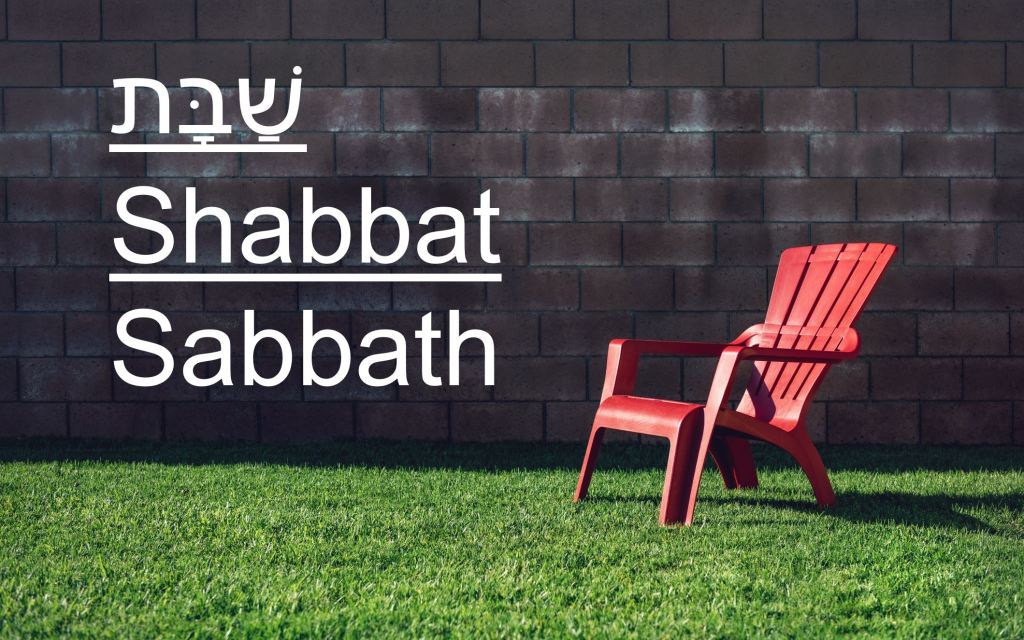
I don’t usually post my sermons on this podcast, but I think this particular sermon will resonate with many working in any field related to first responders. I look at the commands for sabbath rest found in scripture in light of my own experience as a police officer in the late 1980s through mid-90s. This subject of sabbath rest is a common value that often crisscrosses the spectrum of religious faiths and secular philosophies. Rest is critical! Whether you think the story of God’s commandments is divine inspiration or just an ancient wisdom tale, I think you will find something to help orient you in your work and restore your spirit. If you would like to hear more on the subject of rest, listen to the special crossover episode (S1, E7) “Self-Care and Sabbath Rest.”
Texts for the sermon: Deuteronomy 5:12-15 and Matthew 11:28-30
Listen now on Spotify.
Or read it below:
If and when someone mentions the word “sabbath,” what comes to mind? Often, people think about coming to church for services, or restful activities (like golf or fishing, taking a nap), or family activities and dinners. That can all be part of sabbath practices, but there’s a lot more implied by that little biblical word. Over the next three weeks, the Narrative Lectionary asks us to take a break and reflect upon what sabbath is, why God commanded it, and how are we can rightly observe it.
Now, you might recall that the Ten Commandments or Ten Sayings of God in Hebrew are mentioned explicitly in the Jewish scriptures (our Old Testament) only three times (once in Exodus and twice in Deuteronomy). Yet, they remain key to all that comes afterward…key to who the newly freed Israelites are to become…even foundational to what Jesus will teach. Recall that these Twelve Tribes of Israel have survived the horrors and burdens of slavery, and they have come out wounded. They don’t have a good idea of who they are as a people or of their purpose. They are prone to selfishness and infighting. They might be easily influenced by the world around them. So, God provides Moses and his people a structure for their lives. Through these sayings, God commands that they love God, but also commands the love of family, and love of community. These commands are meant to help us love as God loves.
You might also know that some suggest that there are 613 other commandments (or mitzvot) found in the Jewish scriptures (people can count differently), but “the Ten” are the only ones that come directly from God. And all those other dietary laws, and laws about appearance, worship, and civil law relate to the ten – come out of them…are meant to magnify them, The Laws of Moses are all meant (as strange as they might sound to our modern ears) to help Israelites love and worship God and love the neighbor as oneself. As my professor Dr. Dean McBride argued, the Ten Commandments serve as a polity for the Israelites (a kind of constitution), so that they can become kodesh olam, a holy people set apart, the Holy People of God.
So isn’t it interesting that among these ten sayings, we find the command to take a sabbath…to stop doing and just be. Yet “sabbath” isn’t just about you. You are to give a sabbath to your family, your workers, any slaves, even your animals. Isn’t that curious? To become who they are called to be, meant to be, the Israelites are told to promote rest. Much as God ceased work on the seventh day of creation, they are to cease all their work. Yet as a people that has been formally forced to work sometimes seven days a week in Egypt as slaves, God indicates that this practice isn’t just about remembering the creation of the world. God says, “Remember that you were a slave in the land of Egypt, and the Lord your God brought you out from there with a mighty hand and an outstretched arm.” The sabbath is a day to cease work but also a day to embody and remember our faith that God has saved us and loves us. God will provide. So, we can relax.
And so over time, the idea of going to the Temple, or synagogue, or eventually Christian church became intimately connected to the concept of “sabbath.” In community, we can hear of God’s glory, share in community life, and offer worship and praise. Yet it seems that it wasn’t always this way. Some scholars think that the destruction of Temple of Jerusalem and Babylonian Exile gave rise to synagogues sometime after 597 BC. Before that, the Temple, and before that the Tent of Meeting would have priestly activities conducted on the Sabbath, but there was no expectation of the average person’s presence. Primarily, most people just ceased all work. As time passed in the face of persecution, wars, and exile…as the People of God continued to separate themselves from the pagan practices of those around them, they discovered how helpful corporate worship could be in facilitating the people’s understanding of their identities and call. By Jesus’ time, there were pious people who would gather on the Sabbath to sing hymns, listen to scripture, and hear Rabbi’s (or “teachers”) apply the scriptures to one’s daily life. This is much as we do today, and much as faithful Jews do today.
Rest and remember, those are two keys to becoming more of who we were created and meant to be. Certainly, our insurance companies have finally taken notice at some level. All these centuries later, in the Federal government and businesses, one will hear about wellness wheels where we are encouraged to see to the needs of not only our physical body, but also our mental, emotional, and even spiritual selves. As humans, we might understand spirituality differently (that openness to the idea that we are part of something greater than ourselves), but somehow these parts of who we are all interact. They are all connected in our make-up. Yes, the ancient practices of Sabbath helped the Israelites perform better, be better, and grow individually and in community, as much as the practice can help us do so today.
For example, when I was a young police officer working countless hours on midnight shift, volunteering to serve at other times for extra pay, chasing after promotion, without recognizing it, I was running myself ragged. Add to that a toxic mix of trauma and constant stress (basically life – we all experience stress), and I ended up in crisis. My relationships were suffering as were aspects of my health. Then with the help of friends who saw my suffering as well as God’s help (I would argue), I sought to reorient my life toward a more scriptural understanding. I continued to seek to care for others but now also myself. I came to a new understanding that caring for myself was not selfish if done in order to love God and neighbor better. Indeed, I was reminded that God’s commands can be summarized by this, “Loving God with our whole body, heart, and soul (all that we are), and loving our neighbor as ourselves”…That is “AS ourselves,” not better than ourselves.
Because God loves us, within his commands, we discover a healthy love of self can promote love of God and others…It can enrich our lives! And in my case, as a Sergeant pointed out to me without knowing any of my efforts during an annual review that first year, he began to see me perform better and become more patient and kinder. I also found that I handled stress better. Even at some life and death moments, I found that I thought more clearly and discerned more options for how I could respond to the world. I discovered that I became more resilient.
Rest and remember. That’s good advice, for as humans we can easily fall into survival mode. We can find ourselves far from the abundant life Jesus promised. We can burn out rather than burn brightly with the love of Christ. Some might stop superficially at the command to rest and remember never going deeper. Many might become legalistic about it. Others might even become rigid and busy in how they play and vacation – doing, doing, doing. Yet Jesus taught there is more going on here. He told the rabbis of his time that the Sabbath Day was created for us as a blessing. It is not about you being a bad person because your butt is not in a pew every time the door is open. It isn’t just about sleep or vacation. Sure, these things need to be prioritized at times…taken seriously…but we are not given the gift of life for the sake of sabbath. The sabbath is a gift given us so that we can discover a more abundant life.
As an article I read recently suggests, some might judge you harshly for not being at Church.[i] It is true that you might be hurting yourself and in your absence be hurting others who need your presence. They might need your witness of faith, or even just a kind word in passing from you. Yet there are times that our call to be family or serve in the world might also take precedence. And so, the Church has historically discerned that if you cannot be present or have to work or volunteer on any Sunday, be sure to take another Sabbath Day.
Indeed, as early Christians were thrown out of the synagogues and persecuted, our Sabbath Day moved from the Jewish practice of Saturday to Sunday, the day we remember Christ’s resurrection for our sake. So, sabbath is not exclusively about one special day in the week whether Saturday or Sunday. It is not solely about worship.
Again, there’s more going on here. Bonnie Gray, who writes a lot on sabbath rest, argues, “Jesus’ response to our lack of rest is shockingly opposite of these condemning voices.” Jesus taught, “Come to me, all you who are weary and are carrying heavy burdens, and I will give you rest. Take my yoke upon you” …and you will find the rest your souls hunger for. Not surprisingly, God’s heart for us and our need for rest goes deeper than we ourselves can obtain on our own. Even for sabbath, we need God’s help – God’s grace. True sabbath, Bonnie Gray argues, is returning to who God created us to be. Accepted and beloved just as we are.”[ii]
Yes, she goes on, rest contains emotional honesty. We are not gods. We need forgiveness. We need food for our journey. We need to hear of God’s love for us. Rest means that we won’t allow a world that shouts at us, “Do more! Be perfect! Work harder!” to define us. Only God’s love ultimately defines us, and God says it is not only ok, but it can be good to rest. It is important to stop and remember that we are loved, need to share love, and need to be loved. And so there is a relational component to rest. Just as Jesus ate and laughed with his disciples, just as he encouraged their vulnerability to one another and to God, we come to understand that rest is an experience of being known. It is good to have people who you can just be your imperfect self with. In seeking holy, purposeful rest, she says that we resist the noise around us, and we grow still to know God better and listen to God’s whispers.
As much as God fed and cared for Elijah when he was at his physical, mental, emotional, and spiritual limit, God seeks to bless us through rest. Our intimacy with and healthy dependance upon God will grow from the process of rest. And like all of creation that rests in the love of God, as the prophet Isaiah pointed out, we too will break forth into shouts of joy (Isa. 14:7). In closing, Bonnie Gray suggests that rest is giving yourself grace “to receive all the good, instead of letting in the guilt.” “Move as God prompts you,” she urges, “inspired by [God’s] goodness, rather than fear or guilt.” And I would add, rather than from any selfish motivations.
Surrounded by crowds needing forgiveness and healing, with the weight of the world’s salvation on his shoulders, it is important for us to notice that Jesus would break away to pray in the mountains or spend time with those whom he loved. Jesus would go to the Synagogue for the gift of communal worship. Jesus would sleep or allow angels or others to minister to him. Jesus in human form – as busy as he was, as important as his mission was – knew he needed sabbath rest. So, why are we so prideful to deny our own need? Yes, Holy Wisdom proclaims, “There is a time for everything, and a season for every activity under the heavens” (Ecc. 3:1). This includes sabbath…It includes holy rest. Jesus proclaimed that he came that those he loves may have life and have it abundantly. Taking on his yoke, receiving the gift of abundant life, includes taking on his many practices of sabbath rest – not as obligation, but as a means of grace. God commanded sabbath because God knows our needs as created creatures and loves us. Amen.
[i] “What the Bible Says About Rest,” by Bonnie Gray in Relevant Magazine (August 3, 2023) as downloaded at https://relevantmagazine.com/faith/what-the-bible-says-about-rest.
[ii] Ibid.
DISCLAIMER: THIS WEBSITE/PODCAST DOES NOT PROVIDE MEDICAL ADVICE: Although I have served or do serve as a spiritual counselor, a chaplain, and/or ordained minister, I am not your counselor nor a medical professional. All content on this website and podcast is provided for informational and educational purposes only, does not constitute medical, psychological, or spiritual advice, and does not establish any kind of patient-client or pastor-congregant relationship. Although on this website and podcast we strive to provide accurate general information, the information found through these posts are not a substitute for any kind of professional advice, and you should not rely solely on this content. Always consult a professional in the area of your particular needs and circumstances prior to making any professional, legal, medical, financial or tax-related decisions. Opinions expressed by the host or guests do not necessarily reflect those of any other person or entity.
(c) 2023 by The Rev. Louis Florio
 Midnights LEO